Trang chủ
Tình tiết giảm nhẹ trách nhiệm hình sự thường bị bỏ qua vì không biết?
Bài viết đề cập đến nội dung pháp lý liên quan đến Tình tiết giảm nhẹ trách nhiệm hình sự là gì? Tình tiết giảm nhẹ trách nhiệm hình sự thường bị bỏ qua vì không biết? Được Công Ty Luật Tuyết Nhung Bùi giải đáp sử dụng vào mục đích tham khảo.
1. Tình tiết giảm nhẹ trách nhiệm hình sự là gì?
Tình tiết giảm nhẹ trách nhiệm hình sự là những yếu tố mà tòa án cân nhắc để quyết định áp dụng mức hình phạt nhẹ hơn đối với người phạm tội, qua đó thể hiện tính nhân đạo của pháp luật.
Căn cứ Điều 51 Bộ luật Hình sự 2015 sửa đổi 2025 quy định về các tình tiết giảm nhẹ trách nhiệm hình sự như sau:
(1) Người phạm tội đã ngăn chặn hoặc làm giảm bớt tác hại của tội phạm;
(2) Người phạm tội tự nguyện sửa chữa, bồi thường thiệt hại hoặc khắc phục hậu quả;
(3) Phạm tội trong trường hợp vượt quá giới hạn phòng vệ chính đáng;
(4) Phạm tội trong trường hợp vượt quá yêu cầu của tình thế cấp thiết;
(5) Phạm tội trong trường hợp vượt quá mức cần thiết khi bắt giữ người phạm tội;
(6) Phạm tội trong trường hợp bị kích động về tinh thần do hành vi trái pháp luật của nạn nhân gây ra;
(7) Phạm tội vì hoàn cảnh đặc biệt khó khăn mà không phải do mình tự gây ra;
(8) Phạm tội nhưng chưa gây thiệt hại hoặc gây thiệt hại không lớn;
(9) Phạm tội lần đầu và thuộc trường hợp ít nghiêm trọng;
(10) Phạm tội vì bị người khác đe dọa hoặc cưỡng bức;
(11) Phạm tội trong trường hợp bị hạn chế khả năng nhận thức mà không phải do lỗi của mình gây ra;
(12) Phạm tội do lạc hậu;
(13) Người phạm tội là phụ nữ có thai;
(14) Người phạm tội là người đủ 70 tuổi trở lên;
(15) Người phạm tội là người khuyết tật nặng hoặc khuyết tật đặc biệt nặng;
(16) Người phạm tội là người có bệnh bị hạn chế khả năng nhận thức hoặc khả năng điều khiển hành vi của mình;
(17) Người phạm tội tự thú;
(18) Người phạm tội thành khẩn khai báo, ăn năn hối cải;
(19) Người phạm tội tích cực hợp tác với cơ quan có trách nhiệm trong việc phát hiện tội phạm hoặc trong quá trình giải quyết vụ án;
(20) Người phạm tội đã lập công chuộc tội;
(21) Người phạm tội là người có thành tích xuất sắc trong sản xuất, chiến đấu, học tập hoặc công tác;
(22) Người phạm tội là người có công với cách mạng hoặc là cha, mẹ, vợ, chồng, con của liệt sĩ.
– Khi quyết định hình phạt, Tòa án có thể coi đầu thú hoặc tình tiết khác là tình tiết giảm nhẹ, nhưng phải ghi rõ lý do giảm nhẹ trong bản án.
– Các tình tiết giảm nhẹ đã được Bộ luật này quy định là dấu hiệu định tội hoặc định khung thì không được coi là tình tiết giảm nhẹ trong khi quyết định hình phạt.
2. Tình tiết giảm nhẹ trách nhiệm hình sự thường bị bỏ qua vì không biết?
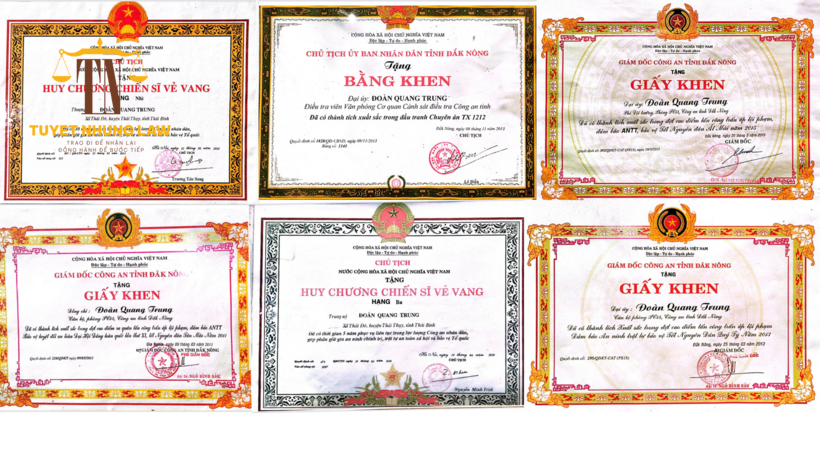
Trong quá trình điều tra, truy tố và xét xử bị cáo hoặc người nhà bị cáo ít để ý đến tình tiết huân huy chương của người thân trong gia đình, tuy nhiên đây lại là tình tiết có thể xem là tình tiết giảm nhẹ khi quyết định hình phạt.
Huân chương được trao tặng cho tập thể có nhiều thành tích; và được tặng hoặc truy tặng cho cá nhân có công trạng, lập được thành tích hoặc có quá trình cống hiến trong cơ quan, tổ chức, đoàn thể.
Huy chương được tặng hoặc truy tặng cho sĩ quan, hạ sĩ quan, quân nhân chuyên nghiệp, chiến sĩ, công chức, viên chức, công nhân quốc phòng đang công tác trong các cơ quan, đơn vị thuộc Quân đội nhân dân; sĩ quan, hạ sĩ quan, chiến sĩ, công chức, viên chức, công nhân làm việc trong cơ quan, đơn vị thuộc Công an nhân dân có thời gian cống hiến, đóng góp; và cho người nước ngoài có nhiều đóng góp đối với sự nghiệp xây dựng và bảo vệ Tổ quốc Việt Nam.
Hiện nay, theo quy định của Bộ luật Hình sự 2015 sửa đổi 2025, chỉ những trường hợp người phạm tội là người có công với cách mạng hoặc là cha mẹ đẻ, vợ, chồng, con (bao gồm con đẻ và con nuôi) của liệt sĩ mới được xác định là tình tiết giảm nhẹ trách nhiệm hình sự theo điểm x khoản 1 Điều 51 của Bộ luật này.
Tuy nhiên, pháp luật vẫn ghi nhận thêm một số trường hợp khác cũng có thể được coi là tình tiết giảm nhẹ trách nhiệm hình sự theo khoản 2 Điều 51 Bộ luật Hình sự 2015.
Theo Điều 5 Công văn số 212/TANDTC-PC năm 2019 của Tòa án nhân dân tối cao về việc giải đáp trực tuyến một số vướng mắc trong xét xử, có quy định rằng: khi quyết định hình phạt, Tòa án có thể xem xét các tình tiết về nhân thân của bị cáo như trình độ học vấn thấp, là lao động chính, có con nhỏ, có ông bà là người có công với Cách mạng… để xác định đây là các tình tiết giảm nhẹ trách nhiệm hình sự thuộc khoản 2 Điều 51.
Cụ thể, vợ, chồng, cha, mẹ, con, anh, chị, em của bị cáo là người có công với nước hoặc có thành tích xuất sắc được Nhà nước phong tặng các danh hiệu vinh dự như: Anh hùng Lao động, Anh hùng Lực lượng vũ trang, Bà mẹ Việt Nam Anh hùng, Nghệ sĩ Nhân dân, Nghệ sĩ Ưu tú, Nhà giáo Nhân dân, Nhà giáo Ưu tú, Thầy thuốc Nhân dân, Thầy thuốc Ưu tú hoặc các danh hiệu cao quý khác theo quy định của Nhà nước thì cũng được xem là tình tiết giảm nhẹ theo khoản 2 Điều 51 Bộ luật Hình sự 2015.
[EN]
This article addresses the legal issue regarding what constitutes mitigating circumstances in criminal liability and why many mitigating circumstances are often overlooked due to lack of awareness. This explanation is provided by Tuyet Nhung Bui Law Firm for reference purposes only.
1. What are mitigating circumstances in criminal liability?
Mitigating circumstances in criminal liability refer to factors considered by the Court when determining a more lenient penalty for an offender, thereby reflecting the humanitarian policy of the law.
Pursuant to Article 51 of the 2015 Criminal Code as amended in 2025, mitigating circumstances in criminal liability are provided as follows:
(1) The offender has prevented or reduced the harmful consequences of the offence;
(2) The offender voluntarily repairs, compensates for damage, or remedies the consequences;
(3) The offence is committed in a situation exceeding the limits of legitimate self-defence;
(4) The offence is committed in a situation exceeding the requirements of necessity;
(5) The offence is committed in circumstances exceeding the necessary measures when arresting an offender;
(6) The offence is committed under mental agitation caused by unlawful acts of the victim;
(7) The offence is committed due to extremely difficult circumstances not caused by the offender;
(8) The offence is committed but has not caused damage or has caused only insignificant damage;
(9) The offence is committed for the first time and is less serious;
(10) The offence is committed due to coercion or threats by another person;
(11) The offence is committed in a situation where the offender’s cognitive capacity is limited without fault on his/her part;
(12) The offence is committed due to backwardness;
(13) The offender is a pregnant woman;
(14) The offender is 70 years of age or older;
(15) The offender is a person with severe or particularly severe disabilities;
(16) The offender is a person suffering from illness resulting in limited cognitive or behavioural control capacity;
(17) The offender voluntarily surrenders;
(18) The offender makes truthful statements, shows repentance, and remorse;
(19) The offender actively cooperates with the competent authorities in detecting the offence or during case resolution;
(20) The offender has rendered merits to make amends;
(21) The offender has outstanding achievements in production, combat, study, or work;
(22) The offender is a person who rendered meritorious services to the Revolution or is the biological parent, spouse, or child of a martyr.
When determining the penalty, the Court may also consider surrender or other mitigating circumstances; however, the reasons for mitigation must be specifically stated in the judgment. Mitigating circumstances prescribed as elements constituting the offence or punishment bracket under the Criminal Code shall not be considered again as mitigating circumstances when determining the penalty.
2. Why are mitigating circumstances often overlooked?
During investigation, prosecution, and trial, the accused and their family members often fail to pay attention to decorations and medals conferred upon their relatives. However, such factors may constitute mitigating circumstances when determining penalties.
A “Medal of Honor / Order” is awarded to collectives with outstanding achievements, or awarded (or posthumously awarded) to individuals who have rendered meritorious services, achieved accomplishments, or made contributions in agencies, organizations, or socio-political entities.
A “Medal” is awarded (or posthumously awarded) to commissioned officers, non-commissioned officers, professional servicemen, soldiers, civil servants, public employees, and defence workers working in agencies or units of the People’s Army; commissioned officers, non-commissioned officers, soldiers, civil servants, public employees, and workers working in agencies or units of the People’s Public Security Forces with years of dedication and contribution; as well as foreign individuals with significant contributions to the cause of building and defending the Socialist Republic of Viet Nam.
Currently, under the 2015 Criminal Code, only cases where the offender is a person with meritorious services to the Revolution, or is the biological parent, spouse, or child (including biological or adopted child) of a martyr, shall be regarded as mitigating circumstances under Point x, Clause 1, Article 51.
However, the law also recognizes other circumstances that may be deemed mitigating under Clause 2, Article 51 of the 2015 Criminal Code.
According to Article 5 of Official Dispatch No. 212/TANDTC-PC (2019) of the Supreme People’s Court regarding responses to online inquiries on issues arising during adjudication, when determining penalties, the Court may consider personal circumstances of the accused, such as low educational background, being the primary breadwinner, having minor children, having grandparents who rendered meritorious services to the Revolution, etc., as mitigating circumstances pursuant to Clause 2, Article 51.
Specifically, spouses, parents, children, brothers, and sisters of an accused who rendered meritorious services to the State or have outstanding achievements and have been conferred by the State honorary titles such as “Labor Hero,” “People’s Armed Forces Hero,” “Vietnamese Heroic Mother,” “People’s Artist,” “Meritorious Artist,” “People’s Teacher,” “Meritorious Teacher,” “People’s Physician,” “Meritorious Physician,” or other prestigious titles as provided by law, shall also be considered as falling under mitigating circumstances pursuant to Clause 2, Article 51 of the 2015 Criminal Code.
CÔNG TY LUẬT TUYẾT NHUNG BÙI cung cấp đội ngũ Luật sư chuyên nghiệp và giàu kinh nghiệm xử lý các vụ án trên thực tế trong lĩnh vực dân sự. Liên hệ tư vấn, mời luật sư tham giao bảo vệ quyền và lợi ích hợp pháp, đại diện theo uỷ quyền trong tố tụng và ngoài tố tụng. Vui lòng liên hệ số điện thoại hotline: 0975.982.169 hoặc gửi yêu cầu qua email: lienhe@tuyetnhunglaw.vn để được hỗ trợ.